Precise keyhole removal of ovarian cysts, preserving ovarian function and fertility while achieving fast, safe resolution with minimal scarring.


Ovarian Cysts at a Glance
Ovarian cysts are fluid-filled sacs that develop on or within an ovary. They are extremely common, with many women developing them at some point during their reproductive years. Most functional cysts (follicular or corpus luteum cysts) are benign and resolve on their own within one to three menstrual cycles without any treatment.
Surgery becomes necessary when a cyst is large (generally over 5 to 6 cm), causing symptoms such as pelvic pain or bloating, persisting beyond three months of observation, or when ultrasound or blood tests suggest it may not be a simple benign cyst. Types requiring surgical evaluation include dermoid cysts, endometriomas (chocolate cysts), cystadenomas, and any cyst with complex features on imaging.
Laparoscopic cystectomy removes the cyst while carefully preserving the healthy surrounding ovarian tissue. This protects your hormone production and fertility. The procedure is performed through 3 small incisions under general anaesthesia, and most women go home the same day.
Book a consultation with Dr. Prashanth J V today.
Book Consultation 📞 +91 93533 16175The procedure is performed under general anaesthesia and takes approximately 30 to 60 minutes depending on the size and type of cyst. The ovary is preserved in the vast majority of cases.
General anaesthesia is administered. Three small incisions (5–10 mm) are made. Carbon dioxide inflates the abdomen to create a working space with clear visibility.
The HD laparoscope provides a magnified real-time view of the pelvis. The ovary and cyst are carefully assessed. Nearby structures including the fallopian tube and surrounding tissue are identified.
The cyst wall is carefully peeled away from the healthy ovarian tissue. A specialised retrieval bag is used to contain any spillage, particularly for dermoid cysts, minimising contact with the pelvic cavity.
Any bleeding points on the remaining ovarian tissue are carefully sealed. The ovary is reconstructed where needed. Normal ovarian tissue is preserved throughout.
The cyst is extracted in the retrieval bag and sent for pathology review. Port sites are closed with absorbable sutures. Most patients are ready for discharge within a few hours.
Most patients are discharged the same day, a few hours after the procedure. Mild soreness around the small port sites is normal and managed with simple analgesics.
Rest at home with light walking encouraged. Some mild bloating from residual gas resolves within a day or two. Avoid driving and lifting until you are comfortable.
Return to desk work and gentle daily activity. Avoid vigorous exercise and intercourse until the follow-up review at 2 weeks.
Full unrestricted activity including exercise. A follow-up ultrasound and pathology result review confirms complete recovery. Menstrual cycles resume normally.
Not all ovarian cysts are the same, and the type determines whether treatment is needed at all.
| Type | What it is | Usual behaviour |
|---|---|---|
| Follicular cyst | A follicle that continued to grow instead of releasing an egg. | Functional. Usually resolves within two or three cycles without treatment. |
| Corpus luteum cyst | The structure left after ovulation fills with fluid or blood. | Functional. Usually resolves spontaneously, though it can bleed and cause pain. |
| Dermoid cyst | A benign tumour containing tissues such as hair, skin and fat. | Does not resolve. Usually removed, particularly if large, because of torsion risk. |
| Endometrioma | A cyst filled with old blood, caused by endometriosis affecting the ovary. | Does not resolve. Associated with pain and with reduced fertility. |
| Cystadenoma | A benign growth arising from the surface of the ovary, which can become large. | Does not resolve. Usually removed when symptomatic or enlarging. |
| Polycystic ovaries | Multiple small follicles, part of polycystic ovary syndrome. | Not cysts requiring removal. Managed medically, not surgically. |
Why torsion is time critical. When an ovary twists on its pedicle, the blood supply is cut off. The ovary can often be saved if the twist is relieved within hours, but prolonged loss of blood supply causes the tissue to die and the ovary may then have to be removed. Sudden severe one-sided pelvic pain is not something to sleep on.
Most ovarian cysts are a by-product of normal ovarian function. Each month a follicle develops, releases an egg and then regresses. If a follicle fails to rupture, or if the structure left behind fills with fluid, a functional cyst results. These are a variation of normal rather than a disease.
The commonest reason by far. Functional cysts form and resolve as part of the ordinary menstrual cycle.
Endometrial tissue on the ovary bleeds cyclically, forming an endometrioma.
Ovulation induction for fertility treatment can produce multiple cysts.
A hormonal condition producing many small follicles, managed medically rather than surgically.
A corpus luteum cyst normally persists in early pregnancy to support it, and usually resolves by the second trimester.
Severe infection can involve the ovary and tube, forming an inflammatory mass.
Functional cysts are common in the reproductive years. After the menopause, any new cyst warrants closer assessment.
Having had one functional cyst makes further ones more likely.
A cyst appearing after the menopause carries a different significance from one appearing at twenty five, because the ovary is no longer cycling. That is why age is central to how a cyst is assessed.
Assessment establishes what the cyst is likely to be, whether it needs removing, and whether specialist referral is required.
Transvaginal ultrasound. The key investigation. It measures the cyst and describes its internal structure. A thin-walled, single-chamber cyst with clear fluid is characteristic of a simple functional cyst. Features such as solid areas, thick internal partitions, irregular walls or increased blood flow are described as complex and prompt further assessment.
Repeat scanning. Often the single most useful test in a premenopausal woman. A simple cyst is rescanned after six to twelve weeks, and most will have resolved, avoiding surgery altogether. Operating on a cyst that would have disappeared on its own exposes a woman to risk for no benefit.
Blood tests. CA-125 is used in interpreting ovarian cysts, but it must be interpreted carefully. It is raised in many benign conditions including endometriosis, fibroids, pelvic infection, pregnancy and even menstruation, so a raised level in a young woman frequently means nothing sinister. It is considerably more informative after the menopause. In younger women with a solid cyst, other markers may be checked for the uncommon germ cell tumours.
A pregnancy test is essential in any woman of reproductive age with pelvic pain, because ectopic pregnancy must be excluded.
MRI. Used selectively where ultrasound is inconclusive, to characterise a cyst more precisely before deciding on surgery.
The majority of ovarian cysts never require an operation. Surgery is reserved for situations where the cyst is causing harm, will not resolve, or cannot be confidently called benign.
| Surgery usually advised | Usually observed |
|---|---|
| Cysts causing significant persistent pain or pressure | Simple cysts under about 5 cm in a premenopausal woman with no symptoms |
| Cysts that persist beyond two or three cycles without shrinking | Cysts likely to be functional, which are rescanned in six to twelve weeks |
| Large cysts, which carry a higher risk of torsion or rupture | Polycystic ovaries, which are managed medically rather than surgically |
| Dermoid cysts and endometriomas, which do not resolve on their own | A corpus luteum cyst in early pregnancy, which normally resolves by itself |
| Complex features on ultrasound, or a raised marker in the right clinical context | Small simple cysts found incidentally with reassuring features |
| Suspected torsion or significant bleeding, which are emergencies | Asymptomatic simple cysts after the menopause below a threshold size, with normal markers, under surveillance |
Cystectomy or removal of the ovary. Wherever possible the cyst is peeled away and the healthy ovarian tissue conserved, which is what cystectomy means. Removal of the whole ovary is considered where the ovary cannot be preserved, where the cyst is very large and little normal tissue remains, in torsion with non-viable tissue, and in some situations after the menopause. This is discussed with you beforehand.
Where malignancy is suspected, care should be delivered by a gynaecological oncology service, since the operation and staging differ substantially from surgery for a benign cyst.
Preparation for planned laparoscopic cystectomy is routine.
Laparoscopic ovarian cystectomy is generally safe and most women recover quickly. The risks specific to ovarian surgery, particularly those affecting future fertility, deserve clear mention.
| Effect | How often | What it means |
|---|---|---|
| Abdominal soreness | Common | At the port sites, settling over one to two weeks. |
| Shoulder tip pain | Common | From the gas used during laparoscopy. Resolves within a day or two. |
| Light vaginal bleeding | Common | For a few days after surgery. |
| Temporary cycle disturbance | Occasional | The next one or two periods may be early, late or heavier than usual. |
| Wound or urinary infection | Occasional | Usually treated with antibiotics. |
| Reduced ovarian reserve | Occasional and important | Removing a cyst inevitably takes a small amount of surrounding tissue. Most relevant when removing endometriomas or operating on both ovaries. |
| Recurrence of the cyst | Uncommon | Particularly with endometriomas, which recur if the underlying endometriosis remains active. |
| Bleeding | Uncommon | The ovary has a rich blood supply. Bleeding is usually controlled at the time. |
| Adhesions | Uncommon | Internal scar tissue, which can contribute to pain or fertility difficulties later. Less likely after keyhole than open surgery. |
| Removal of the ovary becoming necessary | Uncommon | Where the ovary cannot be preserved safely. Discussed and consented beforehand. |
| Injury to bladder, bowel or ureter | Rare | Recognised risks of pelvic surgery, higher where adhesions or endometriosis distort the anatomy. |
| Unexpected finding of malignancy | Rare | Would require referral to a gynaecological oncology team for definitive management. |
For younger women this is often the most important part of the discussion, and it deserves a direct answer rather than reassurance.
Most cysts do not affect fertility. Functional cysts have no lasting effect. A single dermoid or simple cyst removed carefully from one ovary leaves the other ovary entirely unaffected and generally does not reduce the chance of conceiving.
Endometriomas are a particular case. They are associated with reduced fertility through the underlying endometriosis itself, and removing them also removes some normal ovarian tissue. There is a genuine balance here between improving pain and preserving ovarian reserve, and the right answer differs depending on whether pain relief or fertility is the priority, whether both ovaries are involved, and whether fertility treatment is planned. This is a conversation worth having in detail.
Surgery on both ovaries has a greater cumulative effect on ovarian reserve than surgery on one, and repeated surgery more still. Where a woman may need fertility treatment, discussing the sequence with a fertility specialist before operating is often sensible.
Preserving the ovary is the default. Cystectomy exists precisely to remove the problem while keeping functioning ovarian tissue. Where preservation is not possible, one healthy remaining ovary is generally sufficient for normal hormone production and for conception.
Observation is a legitimate and often correct management plan, not a failure to act. Most simple cysts resolve without any intervention, and operating on all of them would cause more harm than benefit.
What observation means in practice. A repeat ultrasound after six to twelve weeks. If the cyst has gone, nothing further is needed. If it persists or has grown, the plan is reconsidered.
The risks of leaving a cyst that should be treated. A large cyst can twist, cutting off the ovary's blood supply, which is an emergency and may cost the ovary. It can rupture, causing sudden pain and sometimes significant internal bleeding. A cyst with genuinely suspicious features should not simply be watched, since delay matters if it is malignant.
The balance. The aim is to avoid unnecessary surgery on cysts that would resolve, while not delaying treatment for those that will not. That is exactly what the ultrasound characteristics, your age and the interval rescan are used to determine.
Recovery after laparoscopic cystectomy is usually straightforward.
There is no way to prevent ovarian cysts entirely, since most arise from normal ovulation. Attending for a scan when pelvic pain is persistent, and seeking urgent care for sudden severe one-sided pain, are the two things that genuinely change outcomes.
Extensive experience with laparoscopic gynaecological procedures, consistently protecting ovarian tissue and fertility outcomes.
Careful tissue handling and precise dissection to preserve as much healthy ovarian tissue as possible, protecting your long-term reproductive health.
Laparoscopic cystectomy allows most patients to return home on the day of surgery, getting back to their daily life with minimal disruption.
Medical References & Further Reading
This page is written and medically reviewed by Dr. Prashanth J V, MBBS, MS, FMAS, FISCP, DMAS, Karnataka Medical Council Registration No. 41048. It is general health information about ovarian cysts and does not replace an individual consultation, examination and investigation. If you have symptoms, please seek personalised medical advice.
 Gallbladder Surgery
 Appendicectomy
 Hernia Repair
 Hysterectomy
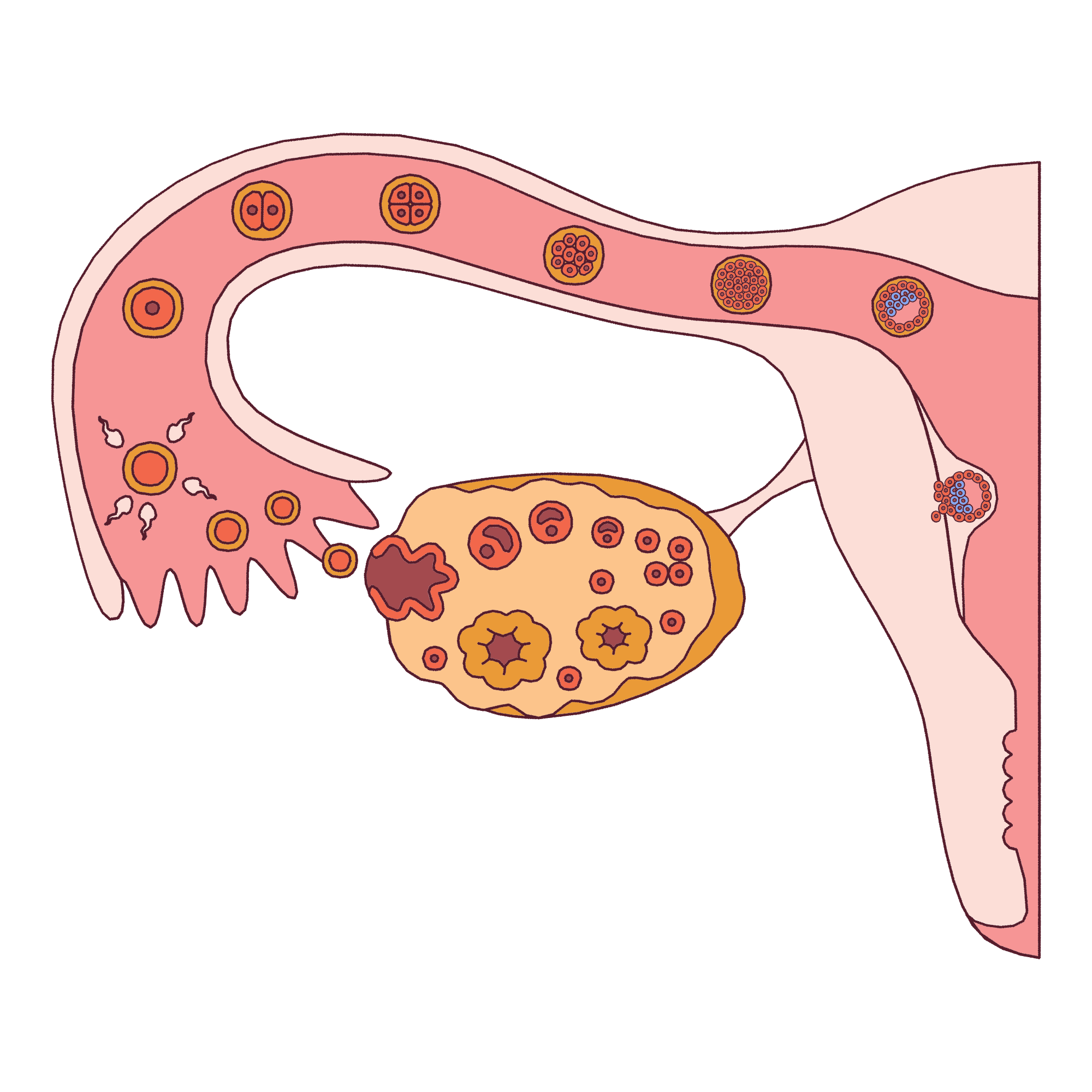 Ovarian Cystectomy
 Tubectomy & Ectopic
 Laser Piles
 Laser Fissure
 Varicose Veins
 Laser Fistula
 Pilonidal Sinus