Advanced laser and sclerotherapy treatment for varicose and spider veins, walk-in, walk-out procedure with excellent cosmetic results and lasting relief.


Varicose Veins at a Glance
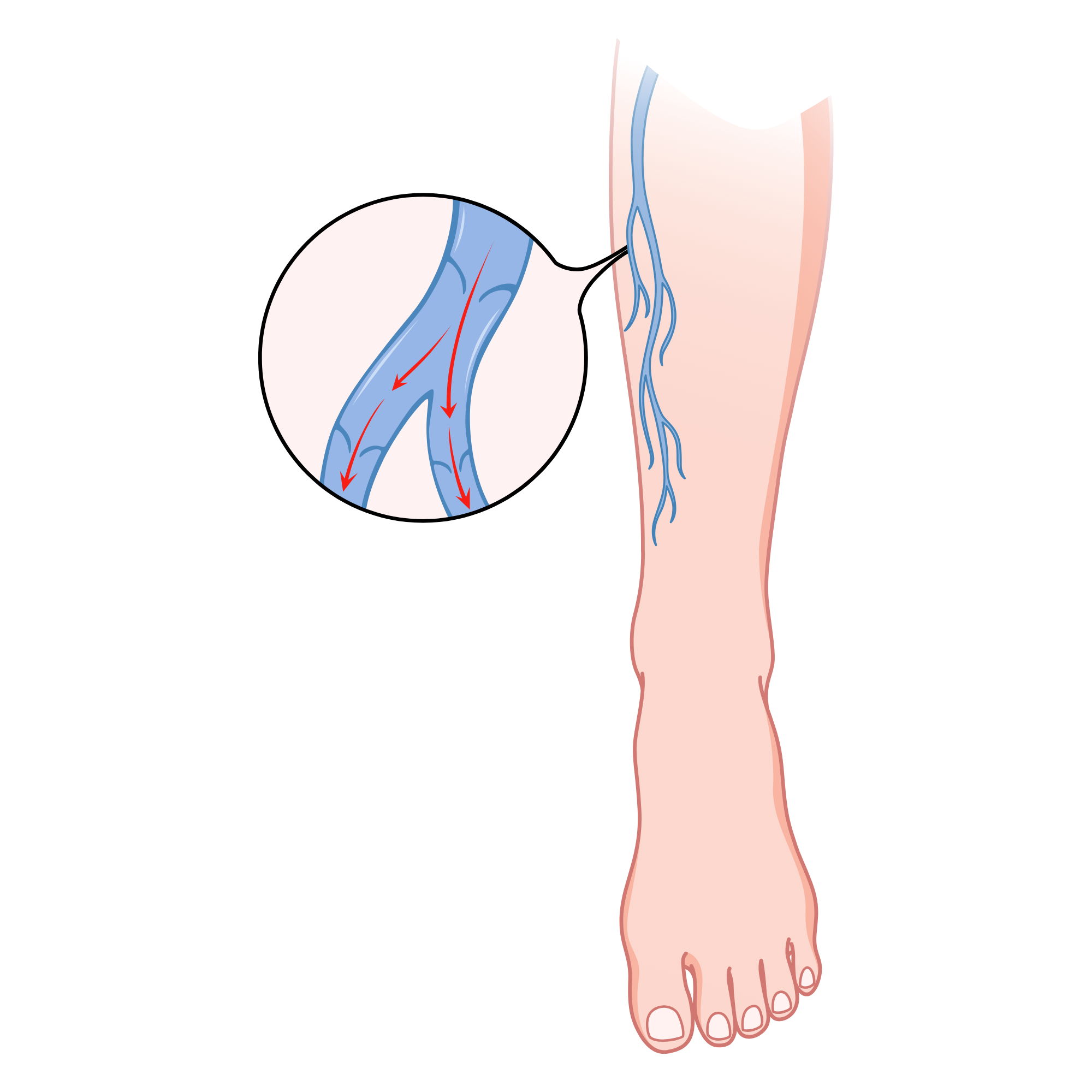
Varicose veins are dilated, twisted superficial veins that typically affect the legs. They develop when the one-way valves inside the veins weaken or fail. These valves normally stop blood from flowing backwards as it travels up the leg to the heart. When they malfunction, blood pools in the vein under the force of gravity, causing it to stretch, enlarge and become tortuous. The condition is more common with age, prolonged standing, pregnancy, obesity and a family history of venous disease.
Many people dismiss varicose veins as a cosmetic problem, but they are a genuine medical condition that worsens over time. Symptoms include aching and heaviness in the legs after standing, visible bulging veins, ankle swelling, itching, skin discolouration and leg cramps at night. If left untreated for years, they can cause venous eczema and eventually venous leg ulcers, open wounds that are very difficult to heal.
Endovenous Laser Treatment (EVLT) permanently seals the faulty vein from within using laser energy, redirecting blood flow through healthy veins. The treated vein slowly disappears over a few weeks. The procedure is done under local tumescent anaesthesia, takes under an hour, and allows you to walk out of the clinic the same day.
Book a consultation with Dr. Prashanth J V today.
Book Consultation 📞 +91 93533 16175Varicose veins produce more than visible bulging. Most patients describe a dull ache or heaviness that builds through the day, is worst after long periods of standing, and eases when the legs are elevated. Symptoms are often worse in hot weather and, in women, in the week before a menstrual period.
Common symptoms include aching, throbbing or heaviness in the legs; ankle swelling that worsens by evening; night cramps and restless legs; itching over the vein; burning or tingling; and skin that becomes dry, discoloured or hardened near the ankle. Bleeding from a thin-walled vein and painful, hard, red segments of vein (superficial thrombophlebitis) are less common but need prompt review.
Surgeons worldwide grade venous disease using the CEAP classification an international consensus system. The clinical component runs from C0 to C6 and determines how urgently treatment is needed.
| Stage | What it means | Typical approach |
|---|---|---|
| C0 | No visible or palpable signs of venous disease, though symptoms may be present. | Reassurance; investigate other causes of leg symptoms. |
| C1 | Spider veins (telangiectasia) or reticular veins, fine red or blue threads under the skin. | Usually cosmetic. Sclerotherapy if desired. |
| C2 | True varicose veins, bulging veins 3 mm or wider. | Duplex scan; endovenous laser ablation if reflux is confirmed. |
| C3 | Varicose veins with persistent leg or ankle swelling (oedema). | Treatment recommended to prevent progression. |
| C4 | Skin changes: pigmentation or venous eczema (C4a); hardened, scarred skin or atrophie blanche (C4b). | Treat promptly, the skin is at risk of breaking down. |
| C5 | Healed venous leg ulcer. | Treat the underlying reflux to prevent the ulcer recurring. |
| C6 | Active, open venous leg ulcer. | Urgent specialist referral; combined wound care and vein treatment. |
Adapted from the international CEAP consensus classification for chronic venous disorders. Staging is confirmed at consultation with a clinical examination and Duplex ultrasound.
Stages C2 and above generally warrant assessment, because venous disease does not resolve on its own. Treating reflux early, while the problem is still a bulging vein rather than a damaged patch of skin, is considerably simpler than managing an ulcer years later.
Leg veins carry blood upward against gravity. They rely on two mechanisms: the calf muscle pump, which squeezes blood upward as you walk, and a series of one-way valves that stop it falling back. When those valves fail, blood refluxes downward and pools in the superficial veins, raising the pressure inside them. The vein wall stretches, and the vein becomes long, wide and tortuous, a varicose vein.
The single strongest predictor. Valve weakness is inherited, and risk rises sharply when both parents are affected.
Teachers, surgeons, retail and factory staff, traffic police and security personnel spend hours with the calf pump inactive and venous pressure high.
Circulating blood volume rises, hormones relax vein walls, and the growing uterus presses on pelvic veins. Veins often improve after delivery but may not resolve fully.
Vein walls and valves lose elasticity over time, so prevalence climbs steadily with each decade.
Higher abdominal pressure impedes venous return from the legs and increases the load on already weakened valves.
Long uninterrupted hours seated at a desk, common in Bangalore's IT sector, leave the calf muscle pump idle for most of the day.
A past deep vein thrombosis can damage deep vein valves, pushing pressure into the superficial system (post-thrombotic syndrome).
Varicose veins are somewhat more common in women, reflecting hormonal influences on vein wall tone.
Risk factors are additive. A person with a family history who also stands for long shifts is far more likely to develop symptomatic disease, and to develop it earlier, than someone with a single risk factor.
Diagnosis has two parts: confirming that the visible veins are varicose, and mapping exactly which veins are leaking. The second part determines the treatment plan, and it cannot be done by looking at the leg alone.
Clinical examination. The legs are examined standing, so the veins fill under gravity. The pattern of bulging, any ankle swelling, and the condition of the skin around the ankle are all recorded, and the stage assigned using CEAP.
Duplex ultrasound. This is the definitive investigation and the standard of care before any varicose vein procedure. Duplex combines an image of the vein with blood-flow measurement, so it shows both anatomy and the direction blood is travelling. The scan identifies which valves are incompetent, measures how long reflux lasts, checks the deep veins are healthy and patent, and maps the junctions where superficial veins join deep ones. It is painless, takes 20–30 minutes, and uses no radiation or dye.
Duplex findings decide everything that follows: whether laser ablation is appropriate, which vein segment to treat, where to place the laser fibre, and whether additional foam sclerotherapy or phlebectomy is needed for surface branches. Treating varicose veins without a Duplex scan risks treating the wrong vein and leaving the underlying reflux untouched, the commonest reason varicose veins recur after treatment elsewhere.
Importantly, a normal deep venous system must be confirmed before superficial veins are ablated. If the deep veins are blocked, the superficial veins may be carrying essential collateral flow, and closing them would be harmful.
Most people with symptomatic varicose veins and confirmed reflux on Duplex ultrasound are suitable for endovenous laser ablation. Suitability is decided by the scan rather than by how the leg looks, which is why the assessment always comes first.
| Usually suitable | Needs discussion first |
|---|---|
| Reflux confirmed in the great or small saphenous vein on Duplex | Pregnancy. Treatment is normally deferred until several months after delivery. |
| Symptoms such as aching, heaviness, swelling or night cramps | Previous deep vein thrombosis, or deep veins that are blocked. Superficial veins may be carrying essential collateral flow. |
| CEAP stage C2 and above, including skin changes and healed or active ulcers | Significant peripheral arterial disease, which must be assessed before compression is used. |
| Veins of a calibre and course the laser fibre can be passed along | Very tortuous surface veins, which often respond better to foam sclerotherapy or phlebectomy. |
| Able to walk and mobilise after the procedure | Limited mobility, active infection in the leg, or a known allergy to local anaesthetic. |
Nothing in the right-hand column rules treatment out automatically. It means the plan is adjusted, or another technique is chosen.
If the deep venous system is blocked, ablating the superficial veins can make matters worse rather than better. This is one of the reasons a Duplex scan is not optional, and why any clinic offering to treat your veins without one should be treated with caution.
Preparation for endovenous laser ablation is straightforward, because the procedure uses local anaesthesia rather than a general anaesthetic. Most people carry on with normal routines right up to the appointment.
Allow around half a day for the visit. The laser itself takes 45 to 60 minutes per leg, with additional time for preparation, the post-procedure check and fitting your stockings.
The procedure takes 45 to 60 minutes per leg and is performed entirely under local tumescent anaesthesia. No general anaesthesia or hospital admission is required.
Before the procedure, a Duplex ultrasound scan maps the faulty veins and identifies where the valves are incompetent. This planning step ensures accurate laser placement along the diseased segment.
Diluted local anaesthetic is injected around the vein under ultrasound guidance. This numbs the area completely, compresses the vein around the laser fibre, and protects surrounding tissues from heat.
A very thin laser fibre is introduced into the faulty vein through a small puncture, no cuts needed. Ultrasound confirms the fibre tip is positioned correctly at the top of the diseased segment.
The laser is activated and the fibre is slowly withdrawn along the vein. Heat destroys the vein wall from within, causing it to collapse and seal permanently. The body gradually absorbs the closed vein over the following weeks.
No stitches needed. A compression stocking is applied immediately. You walk out of the clinic within 30 minutes. The stocking is worn for 48 hours continuously and then during waking hours for 2 more weeks.
Walk out the same day. The leg feels warm and slightly tender along the treated vein. This is expected. Manage with ibuprofen and paracetamol. Walk for at least 30 minutes.
Return to desk work the next day. Continue walking daily. Some bruising along the vein is normal and fades gradually. Wear the compression stocking during the day.
Bruising and tenderness resolve. The treated vein begins to shrink and fade. Resume normal exercise after 2 weeks. A post-procedure ultrasound confirms the vein is fully closed.
The treated vein is no longer visible. Residual surface thread veins can be treated with sclerotherapy at a separate session if needed. Most patients are very pleased with the cosmetic and symptomatic improvement.
Endovenous laser ablation has an excellent safety record and is recommended as first-line treatment by international guidance. It is still a medical procedure, and you are entitled to know what can go wrong before you consent to it. Most of what follows is common, mild and temporary. The serious complications are genuinely uncommon.
| Effect | How often | What it means |
|---|---|---|
| Bruising and tenderness | Common | Along the treated vein, from the tumescent injections. Settles over one to two weeks. |
| Tightness or pulling | Common | A cord-like feeling as the sealed vein shrinks and scars down. Eases over four to six weeks. |
| Skin pigmentation | Occasional | Brownish staining over the treated vein. Usually fades over several months. |
| Numbness or tingling | Occasional | Irritation of a small sensory nerve lying near the vein. Almost always temporary. |
| Superficial thrombophlebitis | Uncommon | A tender, firm, red segment of vein. Managed with anti-inflammatories and compression. |
| Incomplete closure | Uncommon | A segment of vein stays open on the follow-up scan. Usually treated with a short session of foam sclerotherapy. |
| Deep vein thrombosis | Rare | A clot in the deep veins. Risk is reduced by early walking and compression. Needs prompt treatment. |
| Skin burn or infection | Rare | Tumescent anaesthesia surrounds the vein with fluid specifically to protect the skin and tissues from heat. |
Frequencies are broad clinical descriptions, not published rates for any individual surgeon. Your personal risk depends on your anatomy, CEAP stage and general health, and is discussed at consultation.
Recurrence deserves a straight answer too. Laser ablation permanently closes the vein it treats, and that closure is durable. What it cannot do is stop other veins developing reflux later, particularly if the original risk factors remain. Most people do not need further treatment for many years, and where new veins do appear they are usually smaller and simpler to manage than the original problem.
Several treatments exist, and they are not interchangeable. The right choice depends on which veins are refluxing on Duplex ultrasound, the size and depth of the vein, the CEAP stage, and your general health. For varicose veins with confirmed truncal reflux, NICE guidance places endothermal ablation, laser or radiofrequency, ahead of foam sclerotherapy, and both ahead of open surgery.
| Treatment | How it works | Anaesthesia | Return to work | Best suited to |
|---|---|---|---|---|
| Endovenous laser (EVLT) | A laser fibre inside the vein heats and seals it permanently from within. | Local tumescent | 1–2 days | First-line for truncal reflux in the great or small saphenous vein. |
| Radiofrequency ablation | Radiofrequency energy heats the vein wall to seal it. Closely comparable to laser. | Local tumescent | 1–2 days | An equivalent endothermal alternative to laser. |
| Foam sclerotherapy | A foamed medicine is injected under ultrasound guidance, irritating the lining so the vein closes. | None required | Same day | Residual branches, recurrent veins, or when endothermal ablation is unsuitable. |
| Ambulatory phlebectomy | Bulging surface veins are removed through 1–2 mm punctures that need no stitches. | Local | 1–2 days | Large visible branch veins, usually combined with ablation. |
| Open surgery (stripping) | The vein is tied off and physically pulled out through incisions in the groin and leg. | General or spinal | 2–3 weeks | Reserved for cases where the options above are unsuitable. |
| Compression stockings | Graduated external pressure supports venous return. Controls symptoms; does not cure reflux. | Not applicable | Not applicable | Symptom relief, pregnancy, or when a procedure is not appropriate. |
Recovery figures are typical ranges for uncomplicated cases and vary between individuals. Your plan is confirmed after Duplex ultrasound at consultation.
In practice, many legs need a combination: laser ablation to close the refluxing trunk, plus foam sclerotherapy or phlebectomy to clear the visible surface branches. Treating the trunk alone can leave bulges behind; treating the branches alone leaves the underlying reflux that caused them, and the veins return.
The cost of varicose vein treatment in Bangalore is not a single figure, because no two legs need identical work. A precise quotation is given after the Duplex ultrasound, once the extent of reflux is known. These are the factors that move the number:
Bilateral disease requires more laser time, more consumables and a longer procedure, though treating both legs together costs less than two separate sittings.
A single refluxing saphenous trunk is simpler than multiple incompetent segments with several perforator veins.
Foam sclerotherapy or ambulatory phlebectomy for surface branches, when needed alongside ablation.
Advanced disease with skin changes or an ulcer needs additional wound care and longer follow-up.
Duplex ultrasound, blood investigations and anaesthetic assessment where indicated.
Medical-grade graduated compression stockings, medication and follow-up Duplex to confirm closure.
Insurance coverage. Varicose vein treatment is generally covered by health insurance in India when it is medically necessary rather than purely cosmetic, that is, when there are documented symptoms, confirmed reflux on Duplex ultrasound, or complications such as skin changes, bleeding or ulceration. Purely cosmetic spider vein treatment is typically excluded. Most policies apply a waiting period for varicose veins, commonly two to four years from policy inception, and many insurers now approve laser ablation as a day-care procedure. Our team assists with pre-authorisation paperwork and will tell you candidly what your policy is likely to cover before you commit.
Be cautious of prices quoted before a scan. A figure offered over the phone, without knowing which veins are leaking, is a marketing number rather than a clinical one.
Get Your Personalised Quote
Costs are shared directly, once we know what your legs actually need. Call the clinic or book a consultation. We will explain the Duplex findings, the recommended treatment and the full cost, including what your insurance is likely to cover, before you commit to anything.
Varicose veins are progressive. The raised pressure that created them continues to damage the vein wall and the surrounding tissue, so the condition advances through the CEAP stages over years. Progression is usually slow, which is precisely why it is easy to ignore until the skin is involved.
Skin damage and venous eczema. Sustained pressure forces fluid and red cells into the tissues around the ankle. The skin becomes itchy, dry and inflamed, then stains brown as iron is deposited. Over time it thickens and tightens into lipodermatosclerosis, a hard, woody cuff around the lower leg that does not reverse.
Venous leg ulcers. Once the skin is damaged, minor trauma can break it open into an ulcer that will not heal while the underlying reflux persists. Venous ulcers are painful, prone to infection, and can take months to close. Treating the reflux is what allows them to heal and stay healed.
Bleeding. A varicose vein close to the surface has a thin wall under high pressure. A small knock can cause surprisingly heavy bleeding. If this happens, lie down, elevate the leg above heart level and apply firm direct pressure, then seek medical attention.
Superficial thrombophlebitis. Blood clotting within a varicose vein produces a hard, hot, red and tender cord along its length. It is not usually dangerous in itself, but it is painful, and when it occurs near the groin it can extend into the deep system and needs assessment.
Deep vein thrombosis. Established varicose veins are associated with a modestly increased risk of DVT, a clot in the deep veins that can travel to the lungs. Sudden calf pain with swelling, warmth and redness needs same-day medical review.
None of this is a reason to panic about a few visible veins. It is a reason to have them assessed while treatment is still simple.
Self-care will not reverse valve failure that has already occurred: no exercise, stocking or cream closes a refluxing vein. What it can do is relieve symptoms, slow progression, and protect the result after treatment. That is worth doing regardless of whether you proceed to a procedure.
Advice you can safely ignore: there is no credible evidence that massage, herbal creams, ayurvedic oils or dietary supplements close a refluxing vein. They may feel pleasant, but they do not alter the underlying valve failure, and relying on them while the disease advances is how patients arrive at C4 skin changes.
Every EVLT procedure is planned and performed under real-time ultrasound guidance, ensuring accurate laser placement and complete treatment of the diseased vein segment.
Extensive experience treating simple and complex varicose veins, including recurrent cases and those with advanced skin changes or venous ulcers.
No general anaesthesia, no hospital admission, no prolonged recovery. You walk into the clinic and walk out the same day, fully independent.
Medical References & Further Reading
This page is written and medically reviewed by Dr. Prashanth J V, MBBS, MS, FMAS, FISCP, DMAS, Karnataka Medical Council Registration No. 41048. It is intended as general health information and does not replace an individual consultation, examination and Duplex ultrasound. If you have symptoms, please seek personalised medical advice.
 Gallbladder Surgery
 Appendicectomy
 Hernia Repair
 Hysterectomy
 Ovarian Cystectomy
 Tubectomy & Ectopic
 Laser Piles
 Laser Fissure
 Varicose Veins
 Laser Fistula
 Pilonidal Sinus