Safe laparoscopic sterilisation and emergency management of ectopic pregnancy, protecting maternal health and future wellbeing with keyhole precision.


Key Points
Tubectomy (laparoscopic female sterilisation) is a permanent contraceptive procedure in which the fallopian tubes are cut, tied, clipped or sealed to prevent eggs from reaching the uterus. It is chosen by women who have completed their families and want a reliable, long-term option. The procedure does not affect hormone production, periods or libido.
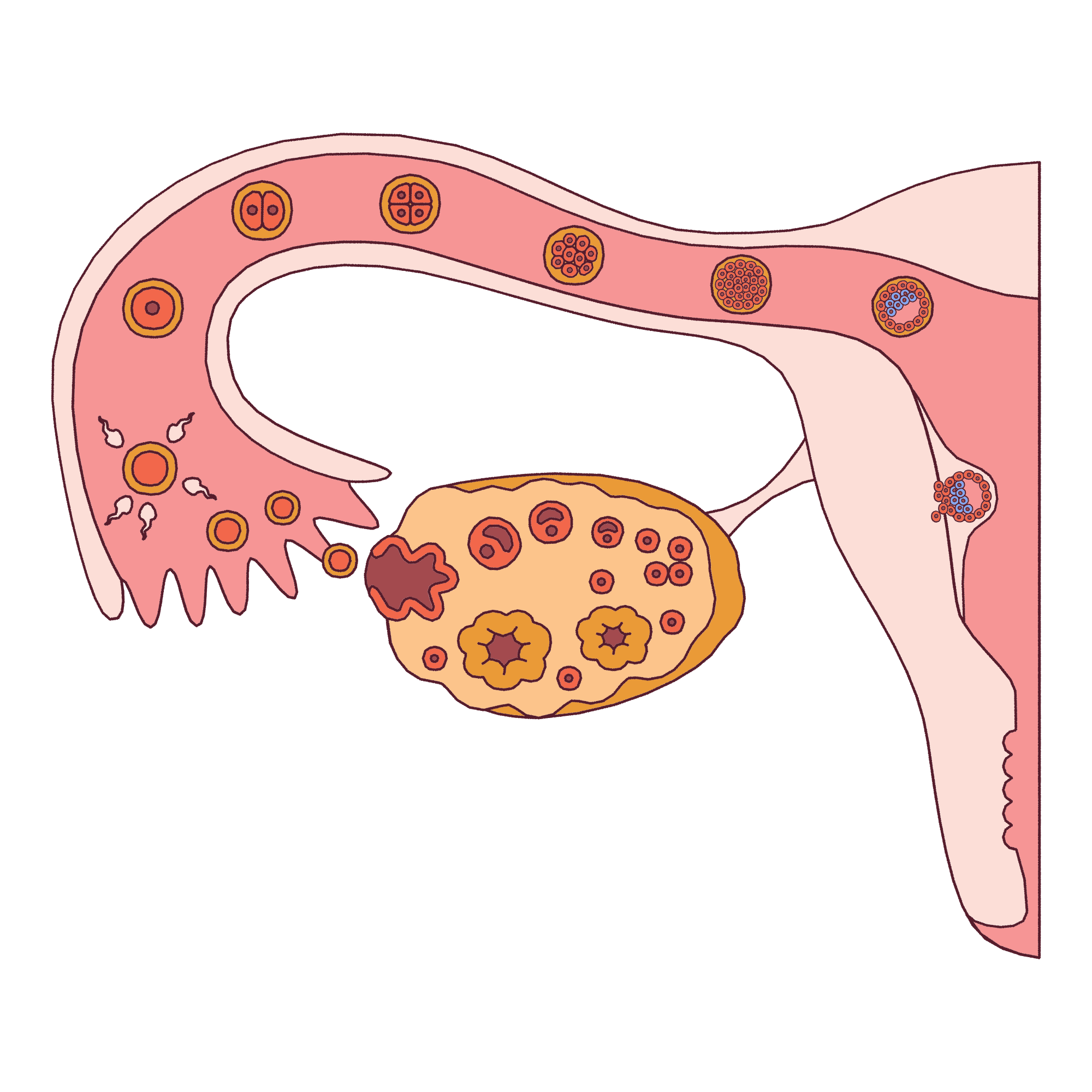
An ectopic pregnancy occurs when a fertilised egg implants outside the uterus, most commonly in the fallopian tube. This is a medical emergency. As the pregnancy grows, it can cause the tube to rupture, leading to severe internal bleeding. Warning signs include one-sided lower abdominal pain with a positive pregnancy test. If rupture occurs, sudden severe pain with dizziness requires immediate emergency surgery.
Both conditions are managed laparoscopically by Dr. Prashanth J V. Laparoscopic surgery offers faster recovery, less pain and smaller scars compared to open surgery, even in emergency ectopic cases when the condition allows for it.
Book a consultation with Dr. Prashanth J V today.
Book Consultation 📞 +91 93533 16175Tubectomy takes approximately 20 to 40 minutes under general anaesthesia. It is a daycare procedure in most cases, meaning you go home the same day.
General anaesthesia is administered. The procedure is entirely painless. Monitoring equipment is attached and the abdomen is cleaned.
Two small incisions (one at the navel, one just above the pubic line) are made. Carbon dioxide creates a working space inside the abdomen for clear laparoscopic visibility.
The HD laparoscope provides a clear view of the pelvis. Both fallopian tubes are identified and assessed before the procedure begins.
The tubes are sealed using electrocautery or clips (Filshie or Hulka clips). A small portion of each tube may be removed to maximise effectiveness. Both tubes are treated.
Ports are closed with absorbable sutures. After a short observation period, most patients are discharged home within 4 to 6 hours.
Discharged home after a 4 to 6 hour observation period. Mild soreness at the two port sites is expected and managed with simple analgesics. Rest for the remainder of the day.
Light activity at home. Mild bloating from residual gas settles within 1 to 2 days. Avoid lifting heavy objects and driving until comfortable.
Return to desk work and normal household tasks. Avoid strenuous exercise and intercourse for 2 weeks. Menstrual cycles resume normally after the next period.
Full unrestricted activity. The procedure is immediately effective as a contraceptive. A follow-up confirms complete healing and answers any remaining questions.
Sterilisation is different from every other procedure on this website, because its purpose is to permanently end fertility in a person who is otherwise well. That places particular weight on the decision being fully informed, freely made and free of any pressure.
It is permanent. Tubectomy should be undertaken only if you are certain you do not want any future pregnancy. Reversal is technically possible in some circumstances but is not routinely available, is not always successful, and depends on how the original procedure was performed. In vitro fertilisation may be an option afterwards but is costly and not guaranteed.
Regret is more likely in some situations. Studies consistently show that regret after sterilisation is more common in those sterilised at a younger age, soon after childbirth or a pregnancy loss, during a period of relationship difficulty, or where the decision was influenced by someone else. None of these prevents sterilisation, but each is a reason to take more time.
The decision must be your own. Consent must be given freely by the woman herself. It should not be conditional on anyone else's agreement, and it should never be given under pressure from family or any other quarter.
Consider the alternatives properly. Long-acting reversible contraception is as effective as sterilisation in practice while remaining reversible, and vasectomy is a simpler, safer procedure with a lower complication rate than female sterilisation.
An ectopic pregnancy occurs when a fertilised egg implants outside the cavity of the uterus, most commonly within a fallopian tube. The tube cannot accommodate a growing pregnancy, and as it stretches it may rupture, causing severe internal bleeding. This is one of the genuine emergencies in gynaecology.
Any woman of reproductive age with abdominal pain and a missed period should have a pregnancy test. An ectopic pregnancy can present before a woman knows she is pregnant, which is why it is easy to dismiss the early symptoms.
| Factor | Why it matters |
|---|---|
| Previous ectopic pregnancy | The strongest single risk factor, since the underlying tubal condition often persists. |
| Previous pelvic infection | Pelvic inflammatory disease damages the delicate lining of the tube. |
| Previous tubal surgery | Including sterilisation and reversal, which alter tubal anatomy. |
| Assisted conception | In vitro fertilisation carries a somewhat higher rate of ectopic implantation. |
| Intrauterine device in place | An IUD prevents pregnancy very effectively, but if pregnancy does occur it is more likely to be ectopic. |
| Endometriosis | Can distort pelvic and tubal anatomy. |
| Smoking | Affects tubal motility and is an independent risk factor. |
An important point about sterilisation. Pregnancy after tubectomy is uncommon, but when it does occur the chance of it being ectopic is higher than in the general population. Anyone who has been sterilised and then develops abdominal pain with a missed period should have a pregnancy test and be assessed, rather than assuming pregnancy is impossible.
Diagnosis combines a pregnancy test, hormone measurement and ultrasound, sometimes over several days where the situation is not immediately clear.
Pregnancy test. A positive test in a woman with abdominal pain requires the location of the pregnancy to be established. This is the step that must not be skipped.
Serum beta hCG. The pregnancy hormone is measured in the blood, and often repeated after 48 hours. In a normally developing intrauterine pregnancy the level rises predictably. A plateau or a slower than expected rise raises concern for an ectopic pregnancy.
Transvaginal ultrasound. The key investigation. It looks for a pregnancy within the uterus and examines the tubes and ovaries for a mass, and the pelvis for free fluid suggesting bleeding. Where the hCG is above a certain level and no intrauterine pregnancy is visible, an ectopic pregnancy becomes considerably more likely.
Pregnancy of unknown location. Sometimes the pregnancy cannot initially be seen anywhere. This is a recognised situation requiring careful follow-up with repeat hormone levels and scans rather than immediate intervention, provided the woman is stable.
Laparoscopy. Both diagnostic and therapeutic where the diagnosis is clear or the woman is unstable, allowing the ectopic pregnancy to be treated at the same time.
Blood group and antibody testing. Women who are rhesus negative require anti-D immunoglobulin, which protects future pregnancies.
For sterilisation, suitability is less about physical fitness and more about certainty. The clinical criteria are straightforward for most women.
| Generally appropriate | Reconsider or delay |
|---|---|
| Certain that your family is complete, with no doubt about future pregnancy | Any uncertainty at all about wanting future children |
| Fully informed about permanence, failure rate and alternatives | Deciding immediately after childbirth, termination or pregnancy loss |
| Long-acting reversible contraception and vasectomy considered and declined | Being pressured by a partner or family member |
| Fit for laparoscopy and general anaesthesia | Current pregnancy, which must be excluded before the procedure |
| No untreated pelvic infection | Significant relationship instability or a period of personal upheaval |
For ectopic pregnancy, management depends on how unwell you are, the hCG level, the size of the ectopic and whether the tube has ruptured. Options range from careful observation in selected cases, through medical treatment with methotrexate, to surgery. A ruptured ectopic pregnancy is a surgical emergency and there is no choice to be made in that situation.
Considering sterilisation, or worried about an ectopic pregnancy?
A consultation explains permanence, alternatives and the procedure. Sudden one-sided pain, dizziness or fainting in early pregnancy needs emergency care.
Preparation depends on whether this is a planned sterilisation or emergency treatment of an ectopic pregnancy.
Laparoscopic tubal surgery is generally safe. The risks below apply broadly to both sterilisation and surgery for ectopic pregnancy, with the important addition that sterilisation carries a specific risk of failure.
| Effect | How often | What it means |
|---|---|---|
| Abdominal soreness | Common | At the small port sites, settling over one to two weeks. |
| Shoulder tip pain | Common | From the gas used during laparoscopy. Resolves within a day or two. |
| Light vaginal bleeding | Common | For a few days afterwards. |
| Tiredness | Common | Particularly after treatment for an ectopic pregnancy, where blood loss may have occurred. |
| Wound or urinary infection | Occasional | Usually treated with antibiotics. |
| Failure of sterilisation | Uncommon but real | Pregnancy can occur despite correctly performed sterilisation, and if it does, the chance of it being ectopic is increased. |
| Bleeding requiring transfusion | Uncommon | More likely in surgery for a ruptured ectopic pregnancy. |
| Conversion to open surgery | Uncommon | Where keyhole access is unsafe or bleeding cannot be controlled laparoscopically. |
| Injury to bowel, bladder or blood vessels | Rare | Recognised risks of laparoscopy, higher where adhesions are present. |
| Venous thromboembolism | Rare | Reduced by early mobilisation and preventive measures. |
A note on emotional recovery after ectopic pregnancy. This is a pregnancy loss as well as an operation, and it often arrives suddenly and frighteningly. Grief, shock and anxiety about future fertility are entirely normal responses. Support is available and asking for it is reasonable, not excessive.
Sterilisation is not the only highly effective option, and in practice the long-acting reversible methods perform comparably while remaining reversible.
| Method | How it works | Reversible? | Notes |
|---|---|---|---|
| Laparoscopic tubectomy | The fallopian tubes are blocked, divided or removed through keyhole surgery. | No | Permanent. Requires general anaesthesia and carries surgical risk. |
| Vasectomy | The vas deferens is divided under local anaesthesia in the male partner. | Not reliably | Simpler, quicker and safer than female sterilisation, with a lower complication rate. |
| Hormonal intrauterine system | A device releasing progestogen in the uterus, effective for several years. | Yes | Comparable effectiveness to sterilisation. Often reduces menstrual bleeding. |
| Copper intrauterine device | A hormone-free device effective for up to ten years. | Yes | Comparable effectiveness. May make periods heavier. |
| Contraceptive implant | A small rod under the skin of the arm, effective for three years. | Yes | Among the most effective reversible methods available. |
| Contraceptive injection | An injection every few months. | Yes | Effective, though return of fertility can be delayed after stopping. |
The practical point is that choosing a long-acting reversible method costs nothing in effectiveness and keeps the option open. Sterilisation makes sense when you are certain, and there is no advantage in reaching for it before then.
Recovery from laparoscopic tubal surgery is usually quick physically. Recovery after an ectopic pregnancy has an emotional component that deserves equal attention.
Most women who have had one ectopic pregnancy go on to have a successful pregnancy afterwards, including many who have lost a tube. Early confirmation of the pregnancy location in the next pregnancy is the key practical step.
#38/2, 2nd Main Road, Madiwala New Extension, Bangalore 560068, behind Ayyappa Temple. Convenient for BTM Layout, Koramangala, HSR Layout, Bommanahalli and Hosur Road.
Dr. Prashanth J V also consults in Koramangala, Jayanagar and Seshadripuram. When you call, the team will confirm the most convenient location for sterilisation or an ectopic pregnancy.
Consultations are by appointment. Call +91 93533 16175 or request an appointment online.
Vast experience with both elective laparoscopic sterilisation and emergency ectopic pregnancy surgery, with safety and informed consent at the centre of every decision.
Ruptured ectopic pregnancy is a surgical emergency. Dr. Prashanth and the Varalakshmi Hospital team are equipped for rapid emergency laparoscopic intervention.
Women choosing sterilisation receive detailed counselling on the permanent nature of the procedure, alternatives and what to expect before any decision is finalised.
Medical References & Further Reading
This page is written and medically reviewed by Dr. Prashanth J V, MBBS, MS, FMAS, FISCP, DMAS, Karnataka Medical Council Registration No. 41048. It is general health information about tubectomy and ectopic pregnancy and does not replace an individual consultation, examination and investigation. If you have symptoms, please seek personalised medical advice.
 Gallbladder Surgery
 Appendicectomy
 Hernia Repair
 Hysterectomy
 Ovarian Cystectomy
 Tubectomy & Ectopic
 Laser Piles
 Laser Fissure
 Varicose Veins
 Laser Fistula
 Pilonidal Sinus